Hidden Home Technology for Florida Interior Designers
You spent months getting the finishes, sightlines, and materials right, and a black speaker or a mismatched keypad can undo that in a second. At Luxury AV, a CEDIA member based in Clearwater, we plan lighting, audio, shades, and controls around your design, so your clients get the technology they asked for without it competing with what you created.
Technology That Enhances Design, Not Competes With It
You were hired for a point of view, and a room only keeps that point of view if nothing in it interrupts the design. Your name goes on the finished space, so a misplaced speaker or an off-finish keypad becomes your problem as much as the installer's.
When Technology Disrupts a Finished Room
Most of the technology your clients want was designed to be seen. Displays are black rectangles, speakers are boxes with grilles, and controls come as banks of switches, and each arrives as a separate decision made at a separate time. By the time everything is in, the room has a TV above the mantel you never drew, a panel of switches beside a wall you spent weeks specifying, and cable that was never meant to be visible. These problems are hard to fix after the finishes are done, and they tend to be the first things your client's guests notice.
How Hidden, Integrated Systems Fit Your Layout
At Luxury AV, we start by deciding with you what should be visible and what should disappear. We consider how each piece of technology fits your architecture, so components, wiring, and controls that don't need to be seen stay out of sight. We do not recommend technology because it is new or impressive. We recommend what suits the room and what your client will use every day, which keeps the system smaller than most people expect.
In a finished project, invisible home technology means a client who gets music, light, and a screen on demand, and a room that still reads as your design. And because the same team designs, engineers, installs, and supports the system, you are not coordinating separate vendors to get there.
Design-First Technology Solutions
Around Tampa Bay, many of the homes you design for sit on the water, and their rooms often open to a lanai through large glass. That leaves few blank walls to hide equipment behind. Your clients still want audio and video and shades that work, so hidden home automation systems have to find their place inside your layout.
In-Wall and In-Ceiling Speakers
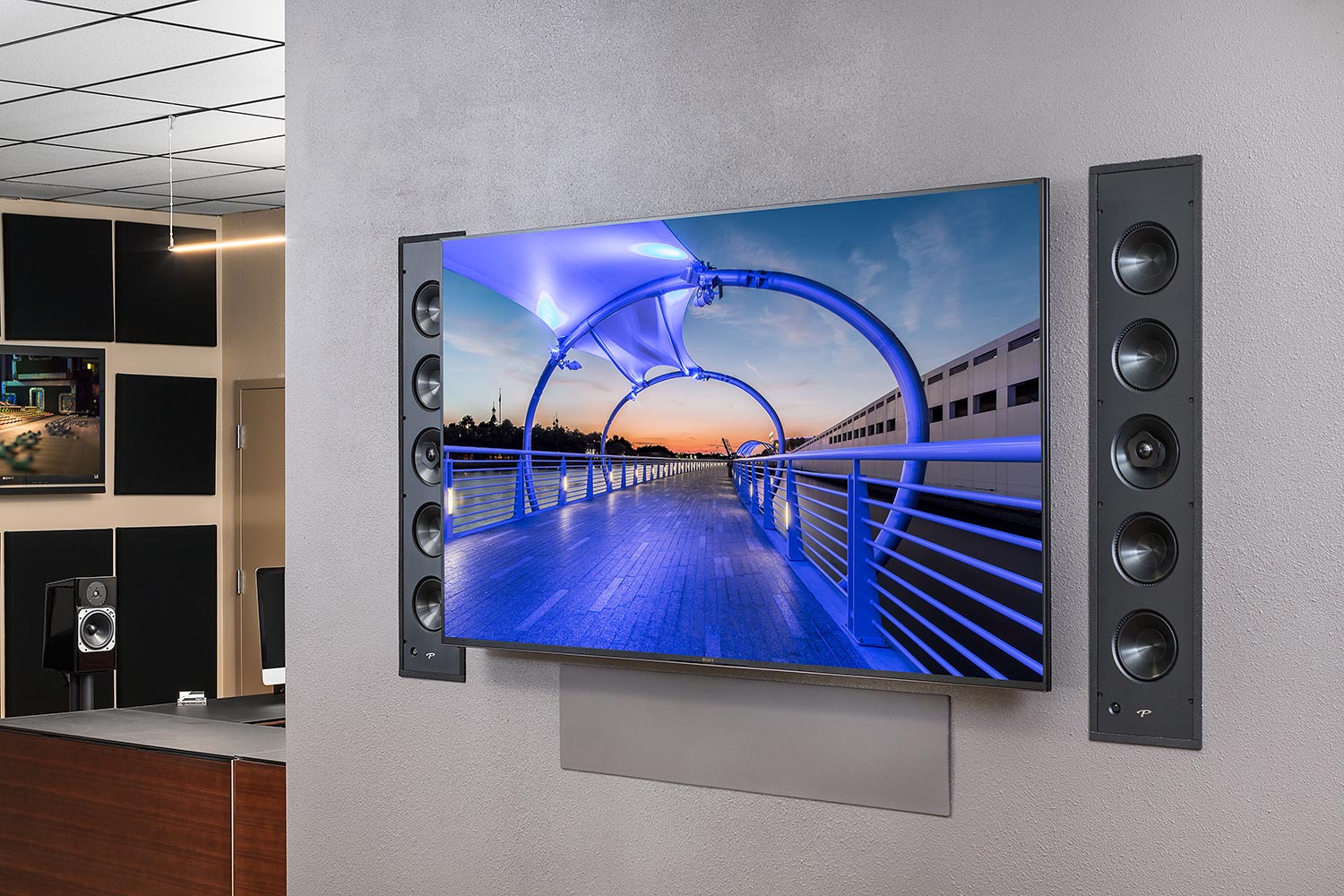
A client asks for sound in the great room, and you have drawn a clean ceiling with no room for a visible speaker. We plan speaker locations with you before anything is cut, so the sound covers the room and your reflected ceiling plan stays intact. We also talk through which spaces suit in-ceiling speakers and which suit in-wall, since a high ceiling and a paneled wall call for different answers.
Concealed and Art-Mode Displays
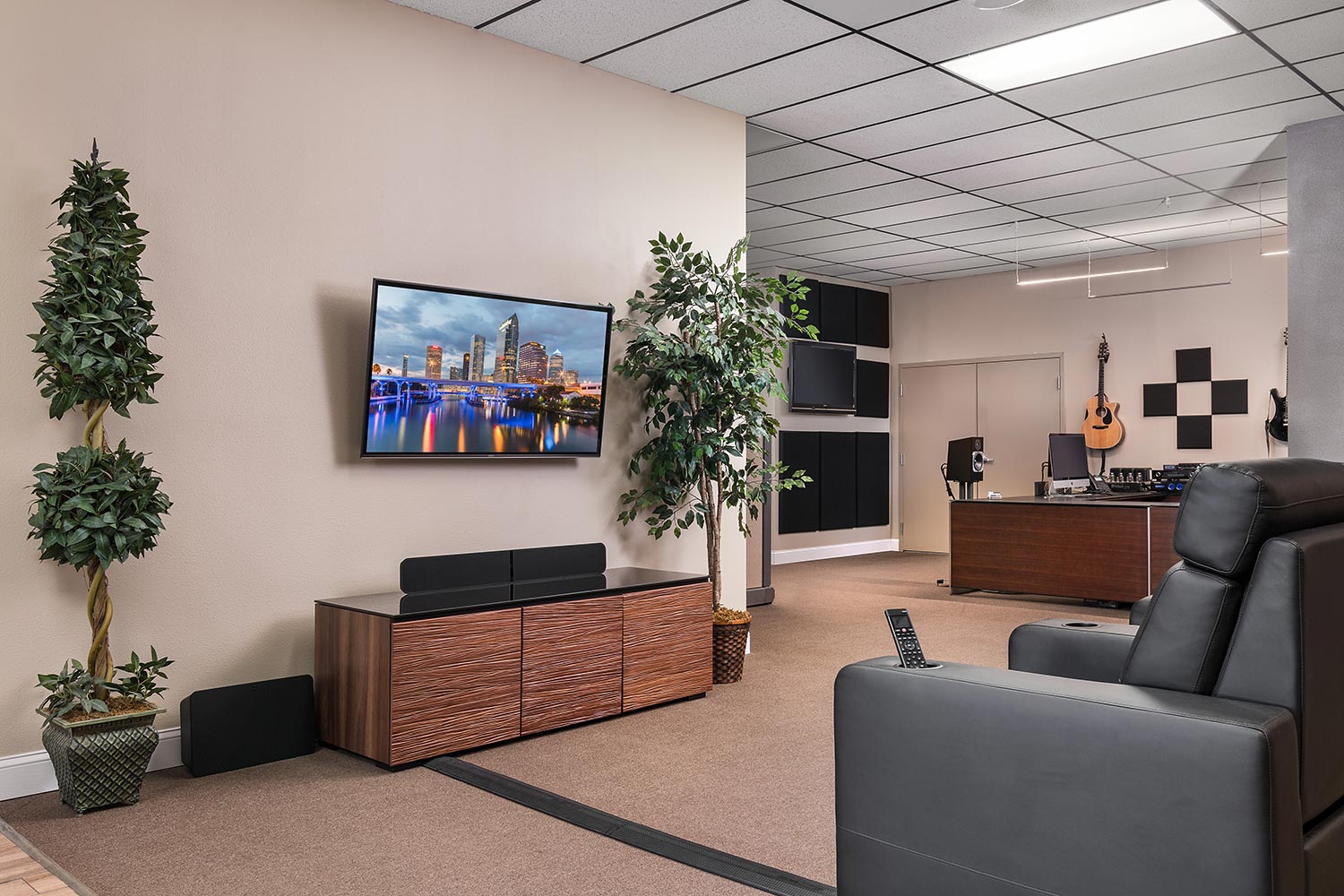
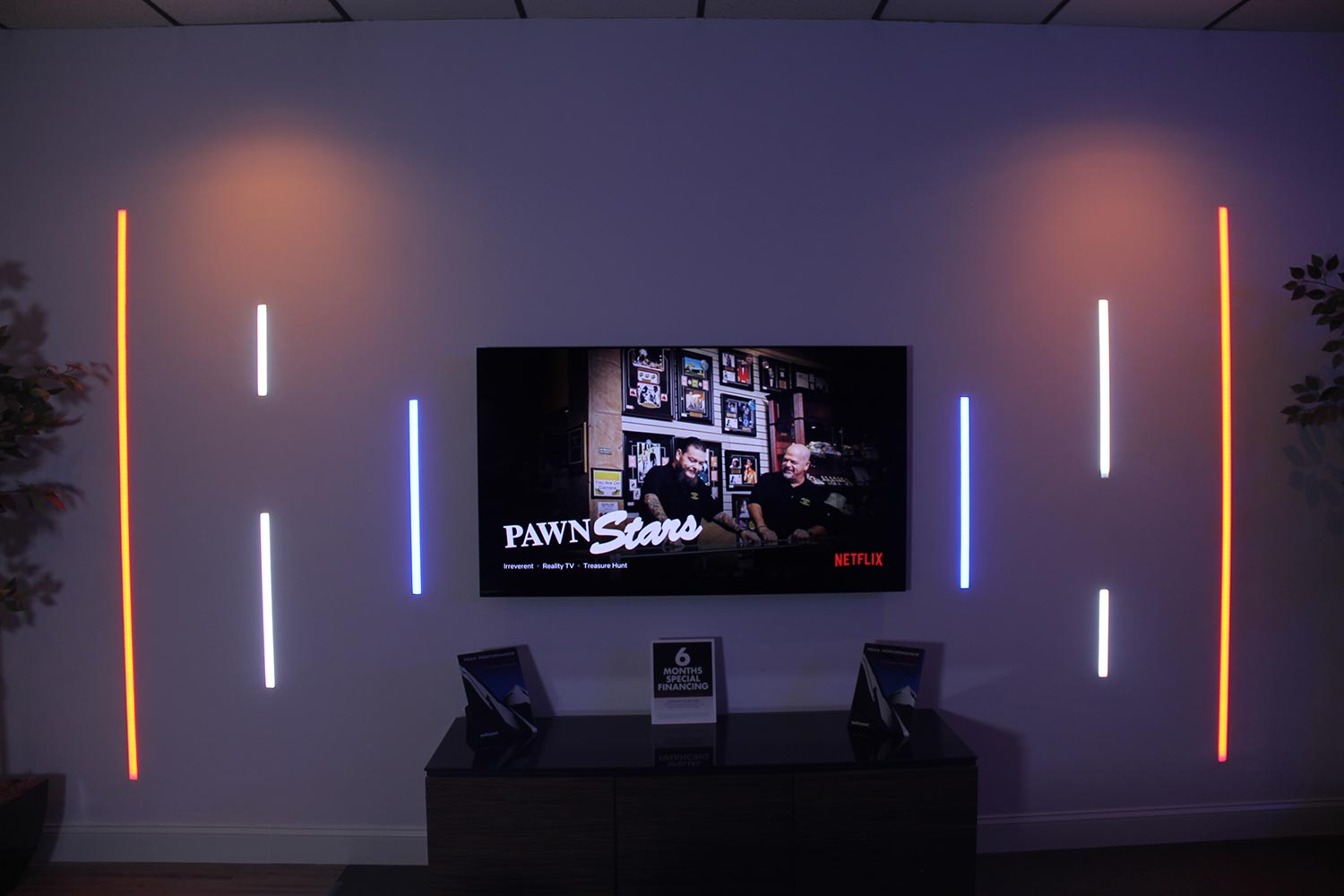
Some clients will not give up the big screen, and you should not have to give up the wall. An art-mode display solves that by showing artwork whenever nobody is watching, so the wall keeps doing its job in your design. When you want the screen out of sight entirely, a concealed display can sit behind a panel or inside millwork you design.
The right one depends on the wall, how far back people sit, and how your client uses the room, so it helps to talk it through while the wall is still on paper. If you are leaning toward a screen that rises from a console or hides behind a sliding panel, we will tell you plainly what the room will allow.
Flush-Mount Keypads and Minimal Controls
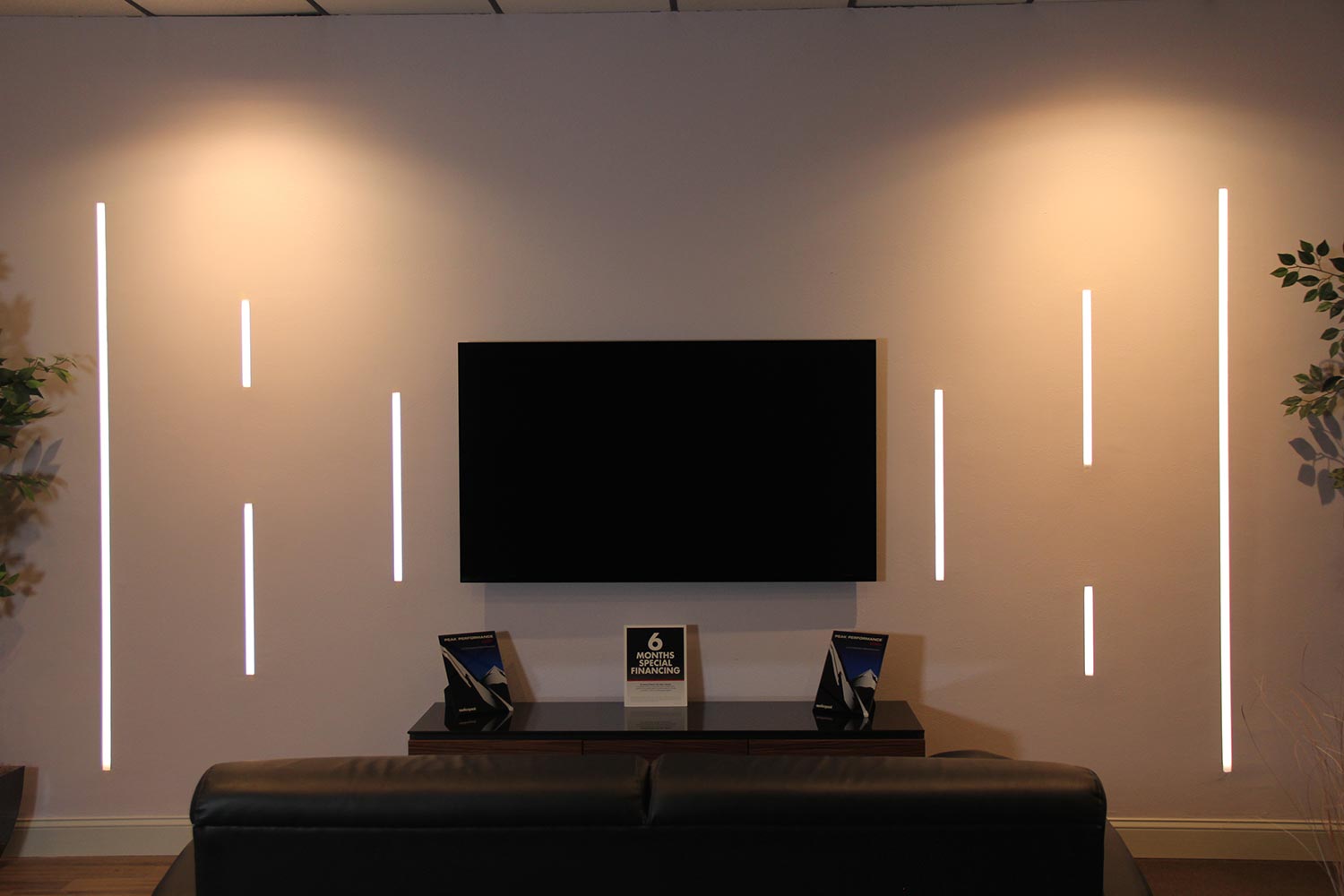
A cluster of switches can undo a wall treatment you worked hard on. We bring controls down to a single keypad where one will do and keep it flush where the wall allows, with finishes that suit the palette. Scenes and schedules handle most of the daily routine, so the keypad becomes something your client touches a few times a day. That also means fewer plates to place on every wall, which keeps your layout cleaner.
Hidden Motorized Shades and Pocket Installations
On Clearwater Harbor and the Intracoastal Waterway, many homes put their largest windows and glass doors on the water side, and low sun can come straight through them. Across a wall of glass like that, the motorized shades you choose shape how the room looks and feels, and where the pocket goes decides whether the ceiling line stays clean.
We work with you on the pocket and headbox so the shade rises out of sight. A shade pocket is easy to add while the ceiling is still being designed. Once the ceiling is finished, adding one means cutting it open, patching it, and repainting, so we like to see your window details early.
Lighting That Protects Your Design Vision
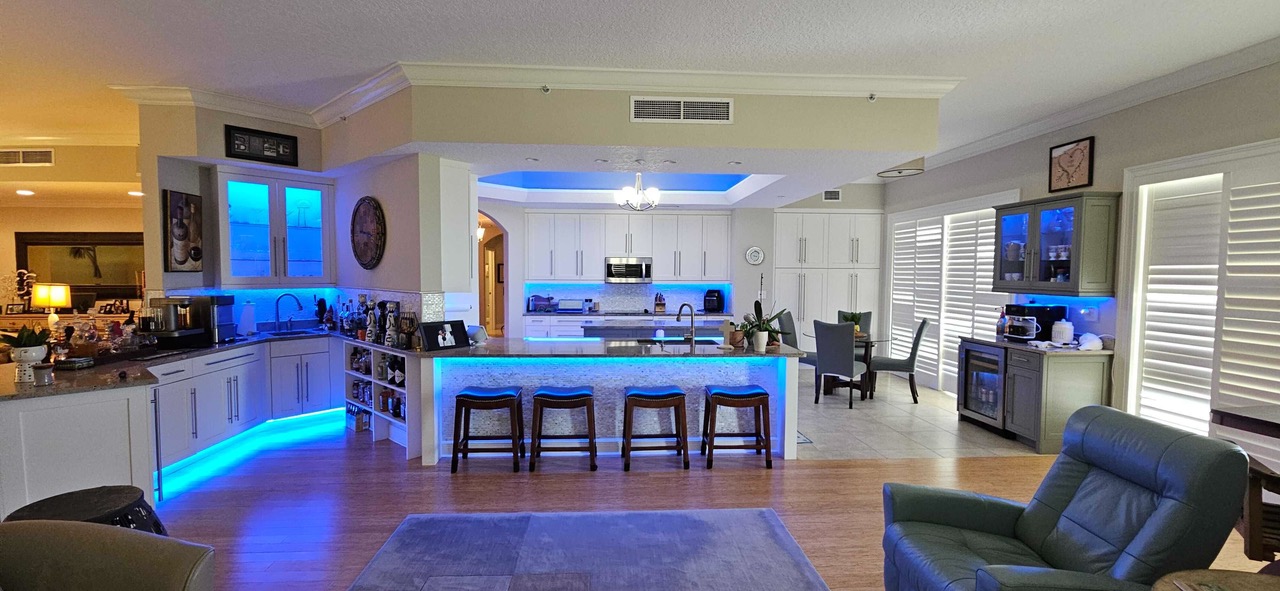
The warm white oak and the linen you specified were chosen under a particular light, and the wrong fixture or a badly set dimmer can change how both look once the project is done. Lighting is the one system your client lives with in every room, every day, which is why we plan it with the same care you put into the finishes.
How Lighting Changes the Way Finishes Look
Light changes how fabric, stone, wood, and paint appear in a room. The color temperature of a fixture, or of a lamp dimmed down for the evening, can pull a finish warmer or cooler than the one you specified. Tampa Bay daylight adds another variable, because the same room looks different at noon than it does at dusk, and fabrics and finishes sit in that light for years.
Homes and condominiums in Clearwater Beach are often built around Gulf sunset views. The last hour of daylight comes in warm and low, so the evening scene you set decides whether the lighting meets that light or fights it. We bring lighting into the conversation with your finish schedule in mind, and we pair fixtures with controls from partners like Lutron so the two are designed to work together.
Creating Consistency from Day to Night
A room should hold together at ten in the morning and at ten at night, and a client should not have to adjust anything to make it so. We build lighting control scenes that follow the day, so evening light stays true to the palette you chose and shades and lights adjust together as the sun moves across the house. Our team programs, tests, and commissions the system, so the scenes are set up and checked before the project is handed to your client.
How Hidden Technology Changes the Finished Room
Some rooms feel settled the moment you walk in, and others feel crowded. The difference is rarely about the equipment and usually about how it was planned.
Eliminating Visual Clutter
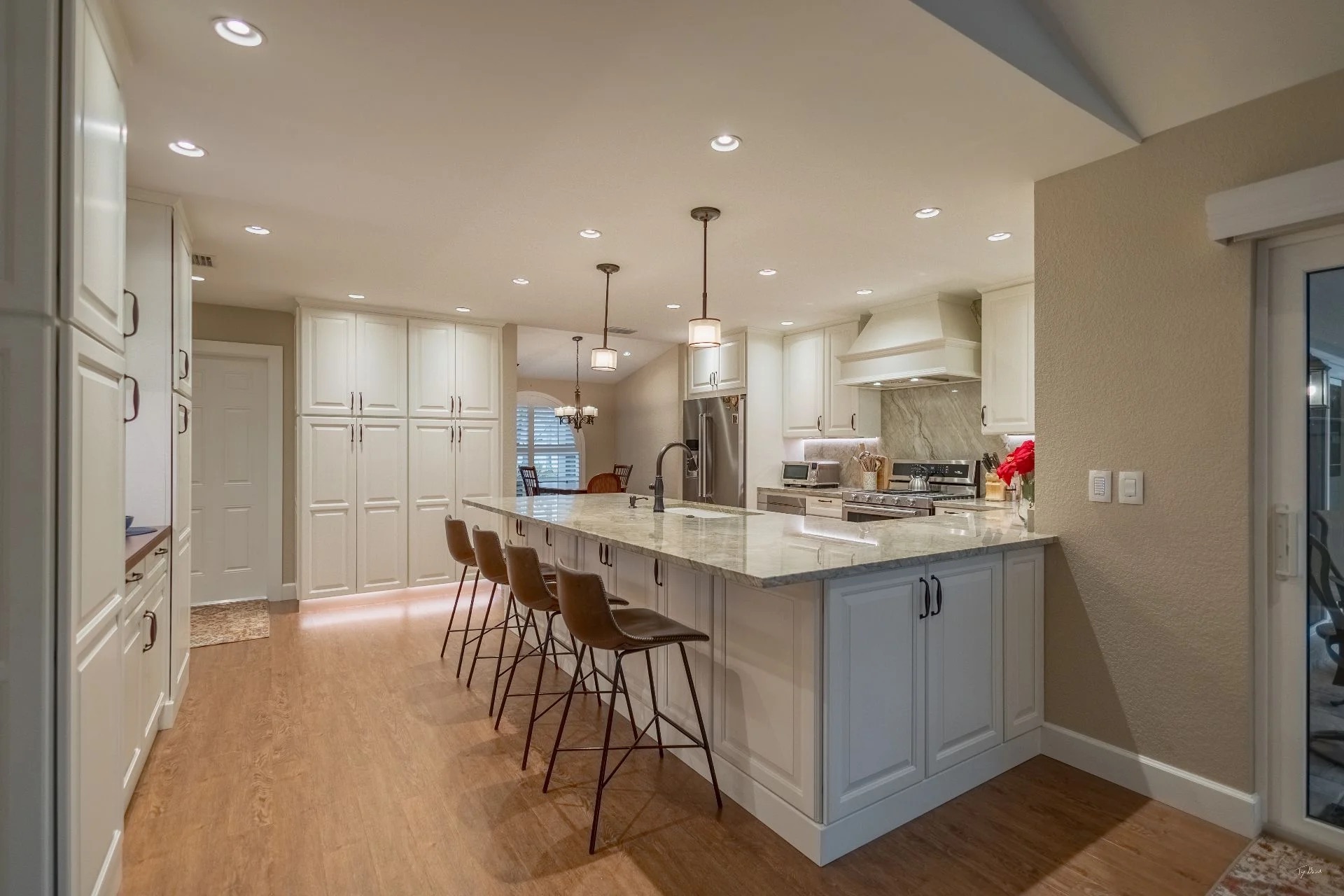
Clutter usually comes from decisions made one device at a time. Picture a great room where the TV went up first, the speakers came next, and the switches were added wherever the electrician had a box. Each choice was reasonable on its own, and together they leave a wall of black glass, grilles you can see from across the room, and a row of plates beside the door. Plan the same room as one system and the screen hides or reads as art, the sound comes from the ceiling, one keypad does the work of the switches, and the wiring stays inside the walls. The room is the same size and holds the same technology, and the difference is entirely in who made the decisions and when.
Seamless Integration Across Spaces
A single clean room matters less than a house that holds together from one space to the next. We apply the same planning to every area we work in with you, from the great room to the primary suite to the lanai, so the whole house reads as one design and not a series of separate decisions. Your client walks through the house without noticing where one decision ended, and the next began, which is how a finished project should feel.




Designed for Collaboration with Interior Designers
The best time to talk about hidden technology in a home design plan is while you are still choosing finishes and the walls are open. A speaker location or a shade pocket is simple to settle then, and much harder to change once the surfaces are done.
Working Together from the Early Design Phase
Our approach to smart home design for interior designers starts with how you and your client want the space to live, then moves through recommendations, planning, installation, and support. We work alongside designers, builders, and architects so the technology fits the larger vision.
We also teach CEDIA CEU courses, so your team can keep learning what is possible before a client asks for it. When a project has a detail that needs more than a course, we build a custom training session around it for your team. If your studio has a project in mind, we are glad to start with a conversation about the drawings.
Keeping Your Design Intact Through Installation
When you hand us a room, we start by asking what you want to see and what you want gone, and then we plan to that. Our team develops the design, engineering, and documentation before installation begins, so the finished room follows the conversation we started with. When the project is done, you know who to call, and we know the system because we planned it. If something needs adjusting months later, you are talking to the team that made the decisions in the first place.
Avoiding Rework and Last-Minute Adjustments
Moving a speaker or a shade pocket on paper takes one conversation. Moving it after the ceiling is closed means patching, repainting, and sometimes a frustrated client, and the extra work usually lands on you. We would rather hear about your ceiling details, window details, and keypad walls now, while they are still lines on a drawing and easy to change.
Frequently Asked Questions About Hidden Home Technology
How early should a designer bring in a technology partner?
Can hidden speakers perform as well as visible ones?
How do hidden systems hold up in humid, coastal Tampa Bay homes?
Can you hide technology in a room that is already finished?
Can I bring my client to see hidden technology in person?
Can technology be hidden on a lanai or covered patio?
Elevate Your Next Project with Design-Friendly Technology
Working on a project in Clearwater, Tampa, St. Petersburg, or Palm Harbor? Luxury AV is based in Clearwater, Florida, and works with interior designers across Tampa Bay on design-friendly smart home solutions. Whatever stage your design is in, we are glad to talk through what is possible. Want to see it first? Book a private appointment at our showroom for a full demonstration.
After you submit the form, our team will follow up to talk through your project and next steps.